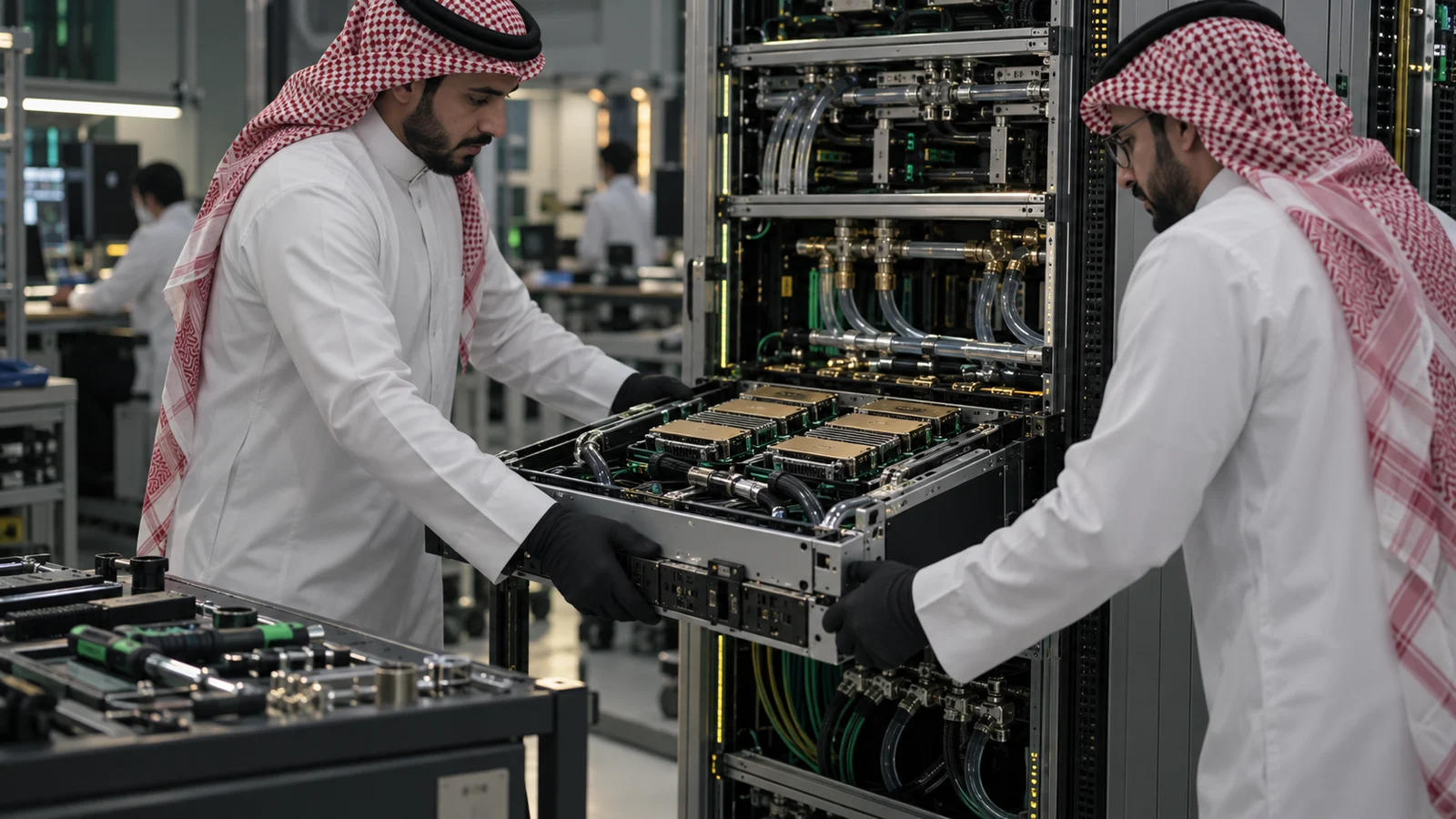
Saudi Arabia's Public Investment Fund launched HUMAIN in May 2025 with a mandate spanning data centres, cloud infrastructure, AI models and applications. On 13 May, HUMAIN and AMD announced a five-year collaboration under which the parties said they would invest up to $10 billion and deploy 500 megawatts of AI compute capacity. The proposed network stretches from Saudi Arabia to the United States and is aimed at enterprise, startup and sovereign customers rather than a single captive workload.
The division of responsibility covers much of the computing stack. HUMAIN is expected to oversee hyperscale data centres, power systems and fibre connectivity. AMD is set to provide Instinct accelerators, EPYC processors, Pensando networking technology and the ROCm software ecosystem. The companies said initial deployments were under way at the time of the announcement and targeted multi-exaflop capacity by early 2026. PIF's description of HUMAIN adds an Arabic-model layer through ALLAM and identifies smart cities, energy, healthcare, manufacturing and finance as target sectors.
Those figures are commitments, not a report of completed capacity. AMD's own release classifies the deployment schedule and expected benefits as forward-looking statements subject to commercial, regulatory, supply-chain and execution risks. The wording “up to” applies both to the investment value and the scale that could be deployed. No public breakdown in the cited sources assigns the 500 megawatts by country, site, year or customer class, and no utilisation target is disclosed.
The collaboration is strategically notable because it pairs Saudi capital and infrastructure ambition with a non-Nvidia hardware and software stack. That could widen customer choice if the platform offers dependable model support, developer tools and competitive economics. The decisive indicators will be commissioned megawatts, available chips, power efficiency, software compatibility, customer onboarding and sustained utilisation. HUMAIN's broad mandate gives it room to connect infrastructure with Arabic models and sector products; it also creates a demanding execution test across several layers of the AI value chain at once.