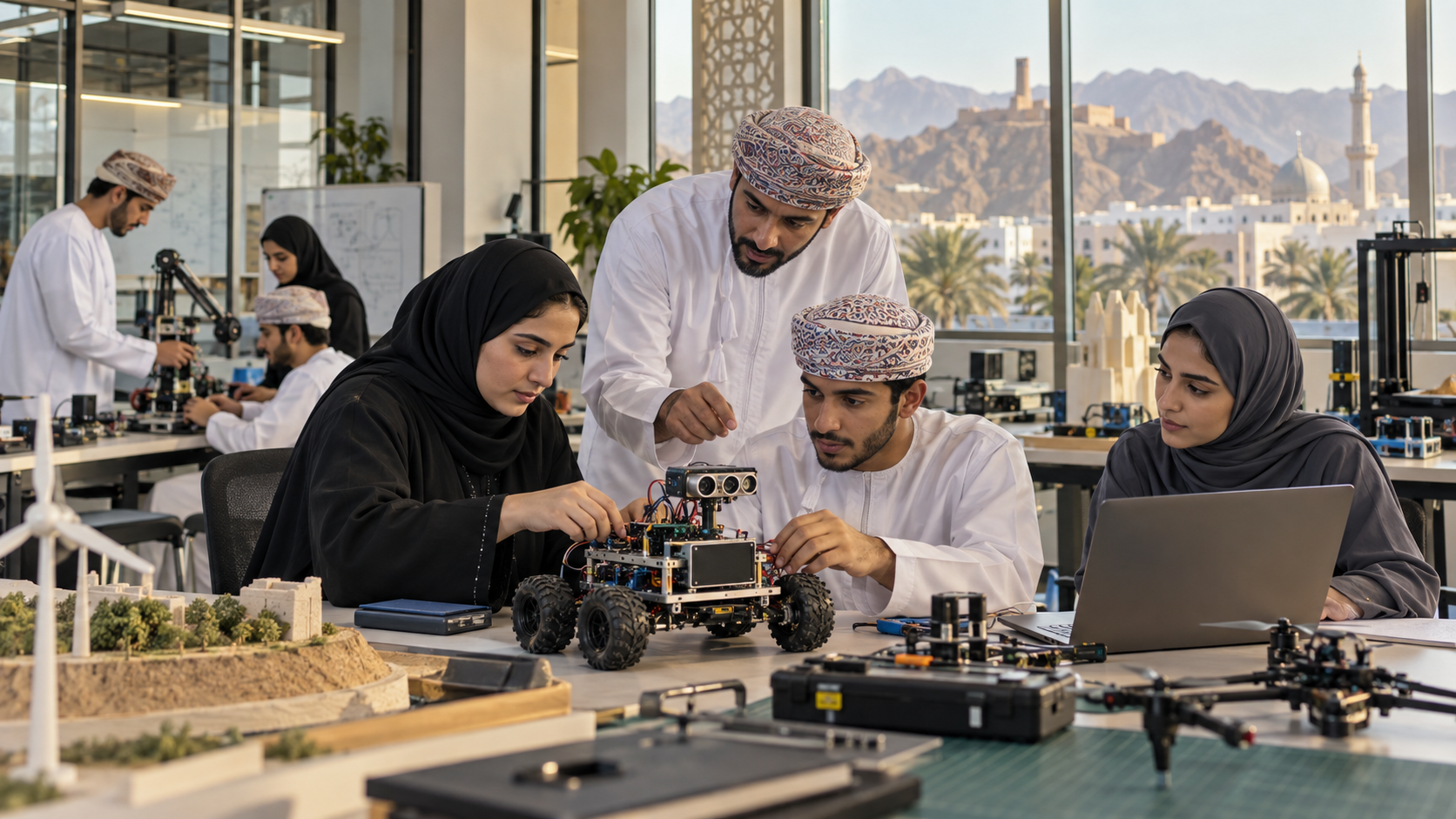
Oman’s Ministry of Transport, Communications and Information Technology is running the second edition of its Engineer It with AI competition from July through September 2026. The programme combines training boot camps, workshops and mentoring to help teams develop artificial intelligence solutions.
The initiative is part of Oman’s broader national AI and advanced digital technologies agenda. Rather than focusing only on awareness or high-level strategy, it is intended to give participants a route from learning to prototype development. That applied emphasis is important for a country seeking to build local capability while using AI to support economic diversification.
Competitions and mentoring programmes can help identify technical talent, but their value depends on what happens after the event. Teams need access to data, users, technical support, funding and institutions willing to test or procure their solutions. Without that path, prototypes may demonstrate creativity without becoming durable products or public services.
Oman’s programme also fits the country’s wider efforts around AI governance, national data, language technology and sector applications. The government has identified areas including logistics, tourism, manufacturing, energy, education and health as potential beneficiaries of advanced digital technologies. Applied programmes can help reveal which use cases are realistic in local operating conditions.
The public announcement confirms the programme structure and participation, but it does not establish that the resulting solutions have entered production or generated measurable economic value. That distinction should remain clear.
The next questions are which teams and applications emerge, who sponsors them, what sectors they serve and whether Oman creates a repeatable pipeline from competition to deployment. The programme is still significant as a practical national capability-building mechanism and a signal of Oman’s intention to develop AI from within its own workforce.
A strong follow-through model would connect finalists with government problem owners, secure test data, technical mentors and procurement pathways. It would also define how prototypes are evaluated for safety, usefulness, cost and maintainability. These steps are what turn a competition into a durable innovation pipeline.
The programme’s immediate achievement is capability formation. Its longer-term importance will depend on whether Omani teams receive the institutional support required to turn promising ideas into services, products or exportable expertise.