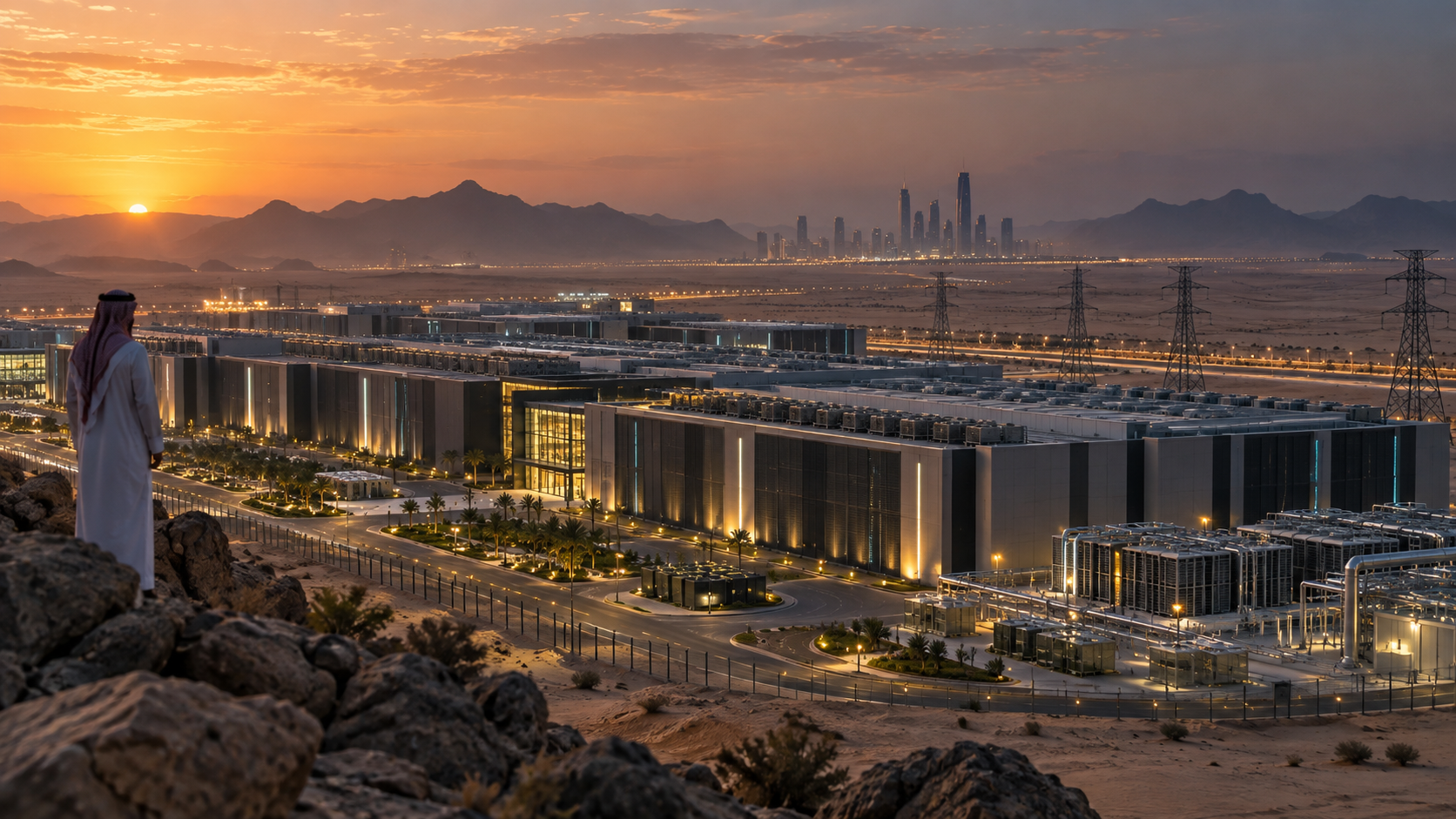
Saudi Arabia’s HUMAIN and data-centre developer DataVolt have signed a preliminary framework agreement with AI cloud company Nebius for capacity at the planned AI campus in Oxagon, NEOM. The agreement announced on 21 October contemplates Nebius becoming an anchor customer and taking up to 50 megawatts, or half of the first 100MW currently under construction.
The project is part of a larger first phase planned at 360MW. The proposed Nebius allocation is expected to become operational in phases from the fourth quarter of 2027, subject to the development and commercial terms progressing. Nebius is expected to deploy NVIDIA-powered computing infrastructure to serve demand from its AI cloud customers.
The agreement matters because it links Saudi Arabia’s infrastructure ambition to a named international customer. AI campuses need more than land and power: developers need customers willing to commit to capacity, cloud operators able to turn facilities into usable compute, and a delivery plan that can connect energy, cooling, networks, accelerators and operations. A preliminary offtake framework is not the same as a completed lease or an operational cloud region, but it provides an early commercial signal.
Oxagon is positioned by NEOM as an advanced industrial city on the Red Sea coast. HUMAIN brings the Public Investment Fund-backed AI ecosystem, while DataVolt is responsible for digital-infrastructure development and operation. The proposed relationship with Nebius adds an AI-cloud demand layer to the campus and gives the project a route toward serving customers beyond Saudi Arabia.
The public announcement does not disclose the commercial value of the agreement, the final pricing structure or the full technical specification of the Nebius deployment. It also does not establish that the entire planned campus has secured customers. Those limitations are important when interpreting headline capacity figures: megawatts under construction, planned capacity and live compute are different stages of delivery.
The milestone nevertheless strengthens Saudi Arabia’s position in the Gulf compute race. It suggests that the Kingdom is trying to build a full-stack proposition in which energy, data-centre infrastructure, accelerated computing, cloud services and AI applications reinforce one another. The next evidence to watch is construction progress, definitive agreements, hardware delivery and the first operational capacity. Until then, the Nebius framework is best understood as a major commercial commitment in development rather than a completed AI deployment.